
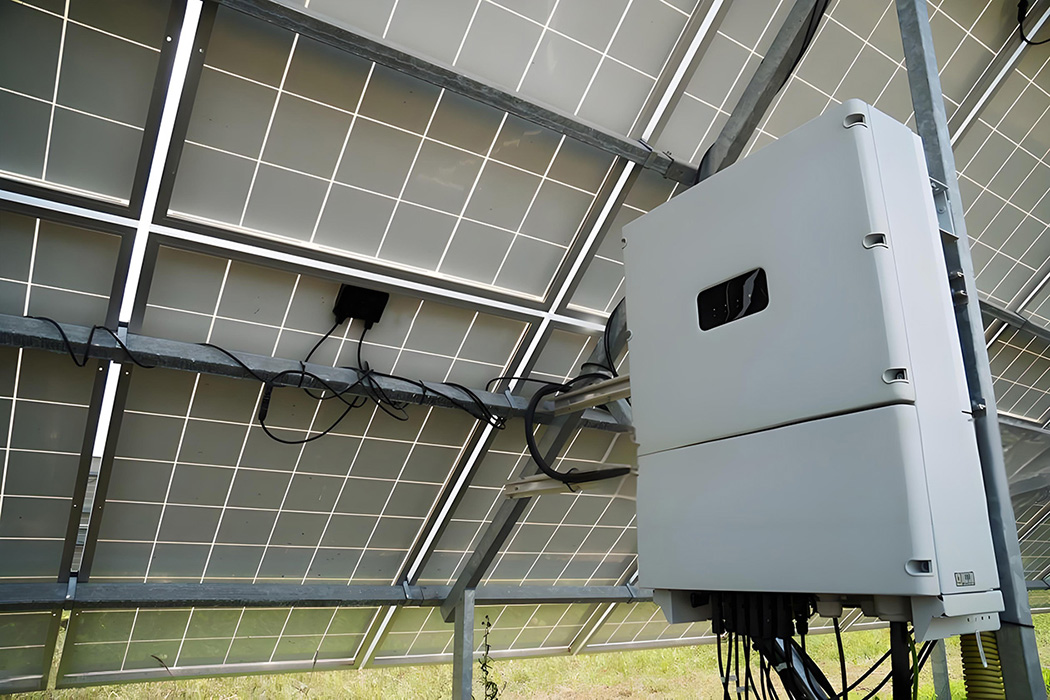
As solar and energy storage systems become more widely adopted, the inverter has become a core component in any photovoltaic (PV) setup. Its role is to convert DC (direct current) from solar panels into AC (alternating current) that can be used by household appliances or fed into the grid.
Among the various inverter types, two main structures dominate the market:Low Frequency (LF) inverters and High Frequency (HF) inverters.What’s the difference between the two? Which one is better for your project? This article breaks it down for you.
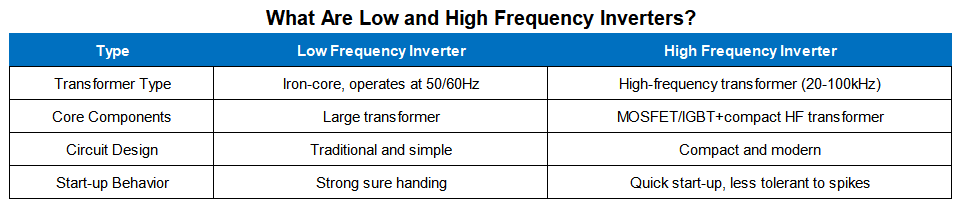
Key Differences in Performance
1. Size and Weight
① Low Frequency Inverters: Heavy due to large iron-core transformer.
② High Frequency Inverters: Lightweight and compact thanks to high-frequency technology.
Verdict: High Frequency inverters are ideal for space-constrained installations and portable systems.
2. Efficiency
① High Frequency Inverter: Typically 90%–96% efficiency, less energy loss.
② Low Frequency Inverters: Slightly lower (85%–92%), but robust.
Verdict: High Frequency inverters offer better energy efficiency, especially in grid-tied or commercial setups.
3. Load Tolerance & Reliability
① Low Frequency Inverters: Better at handling inductive or motor loads like pumps and compressors.
② High Frequency Inverters: More sensitive to sudden load changes; design quality matters.
Verdict: Low frequency inverters are better suited for industrial or heavy-duty environments.
4. Cooling & Maintenance
① High Frequency inverters require advanced thermal design due to denser circuits.
② Low Frequency inverters are easier to maintain and more forgiving in harsh conditions.
Verdict: Low Frequency inverters may offer better longevity in extreme environments.
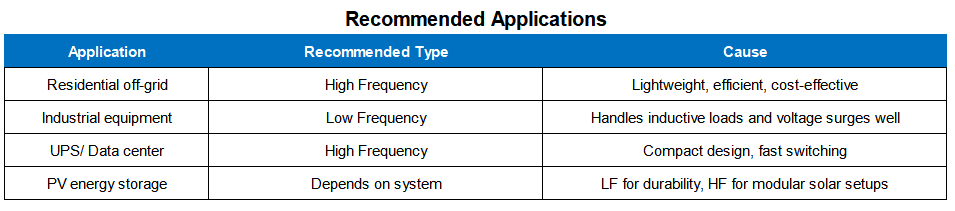
Cost & Value Comparison
① High Frequency Inverters: Lower cost, suitable for general home use.
② Low Frequency Inverters: More expensive, but offer robust performance in critical applications.
Buying Tip: If cost and ease of installation are key, choose HF. For heavy-duty or mission-critical use, LF remains a solid choice.
Future Trends & Selection Tips
High-frequency inverters have become mainstream in residential and light commercial systems due to their lightweight design and high efficiency. However, low-frequency inverters still offer unique advantages where rugged performance and surge handling are critical.Before choosing an inverter, consider:
① Type of load (inductive, resistive, or mixed)
② Installation space and cooling conditions
③ Frequency of charging/discharging cycles
④ Budget and long-term system lifespan expectations