
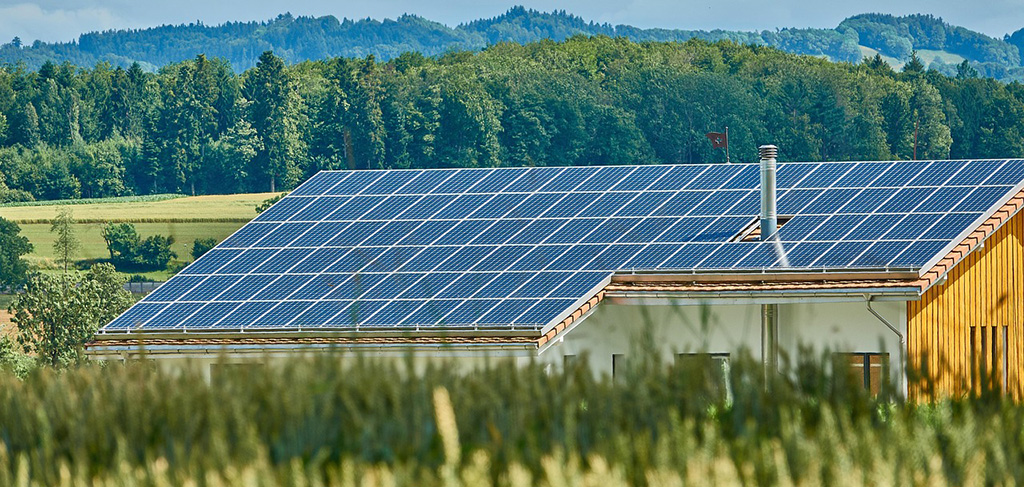
In many remote parts of the world, electricity supply remains insufficient. Whether in African villages, mountainous areas of Southeast Asia, or rural regions of South America, households often face frequent blackouts or live entirely without access to electricity. Power shortages not only affect daily life but also hinder education, healthcare, and economic growth. With the advancement of solar technology, off-grid solar systems provide a practical solution. These systems operate independently of the public grid, using solar panels, charge controllers, batteries, and inverters to convert sunlight into stable electricity for lighting, appliances, and essential needs.
Compared with traditional diesel generators, off-grid solar systems offer cleaner, lower-maintenance, and more cost-effective long-term benefits. Although the initial investment may cause hesitation, the falling prices of solar panels and the improved performance of energy storage batteries are encouraging more households to adopt this green energy solution.
So, how can remote households truly solve power shortages with off-grid solar systems?
First, system capacity should be designed based on the household’s real needs. Basic electricity consumption usually includes lighting, phone charging, fans, small refrigerators, or televisions. By calculating the power and usage time of these appliances, the total daily energy demand can be estimated. This determines how many solar panels are required, the storage capacity of the batteries, and the appropriate inverter size.
Second, storage batteries are critical in off-grid systems. During sunny hours, electricity powers the loads and charges the batteries; at night or during cloudy days, households rely on stored energy. Lead-acid batteries remain common due to affordability, but lithium iron phosphate batteries (LiFePO₄) are increasingly preferred for their longer lifespan and higher energy density.
Moreover, proper configuration of inverters and controllers is crucial. The inverter ensures stable AC output to run household appliances, while the charge controller protects the battery from overcharging or deep discharging. Selecting the right equipment not only improves system efficiency but also extends its lifespan and reduces maintenance costs.
The choice of solar panels is equally important. Polycrystalline silicon panels offer better value for money, while monocrystalline silicon panels are more efficient and better suited to homes with limited roof space. In remote areas, solar radiation conditions are often excellent, but installation angle and orientation must be considered to ensure optimal power generation efficiency. Generally, panels should face the equator (southward in the Northern Hemisphere and northward in the Southern Hemisphere), with an inclination angle close to the local latitude.
For remote households, the greatest advantage of off-grid photovoltaic systems lies in their ability to achieve energy independence. Solar energy is an inexhaustible resource; as long as there is sufficient sunlight, households can continuously generate electricity through solar panels, which is then converted into alternating current by a photovoltaic inverter to power common household appliances. When paired with energy storage batteries, the system can continue to supply power during nighttime or inclement weather, ensuring the normal operation of essential lighting, communication devices, water pumps, refrigerators, and small appliances. This represents a significant improvement in quality of life for households that previously lacked stable access to electricity.