
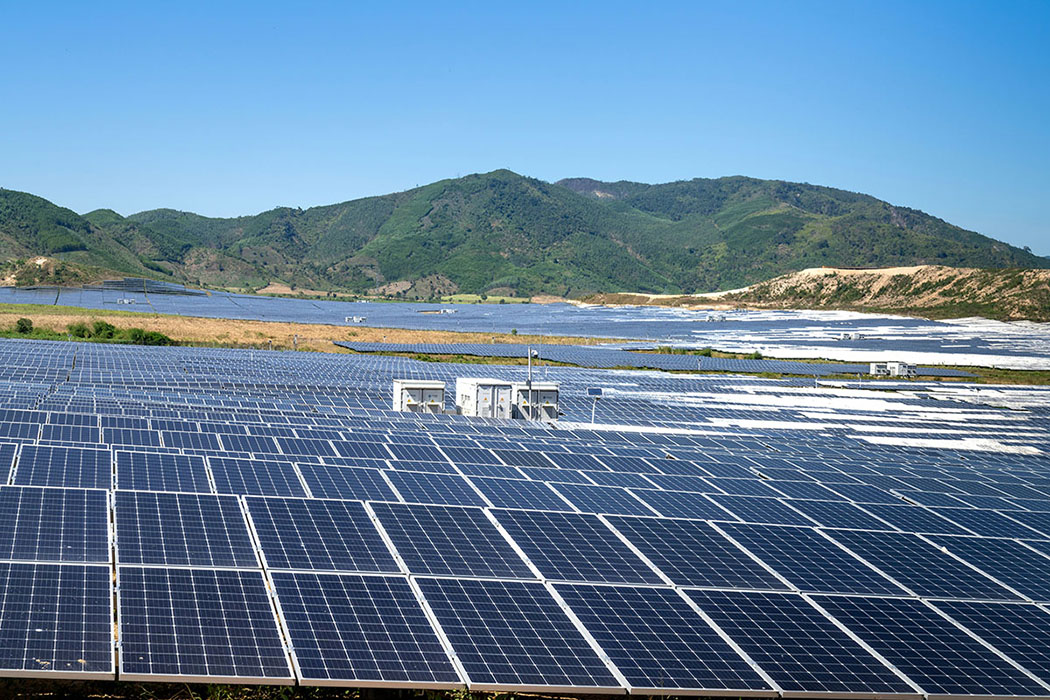
The global photovoltaic industry will usher in a historic turning point in 2025. Under the interweaving of technological revolution, policy drive and market reshuffle, the photovoltaic industry is moving from "scale expansion" to "high-quality development".
Technological Leap: Perovskite Commercialization
China’s GCL Tech has pioneered the mass production of perovskite single-junction modules with 22% efficiency, reducing costs to ¥0.35/W, 40% lower than traditional crystalline silicon (c-Si) modules. U.S.-based TandemPV’s perovskite-c-Si tandem modules achieved a record 30.2% efficiency, securing over $1 billion in orders from Microsoft and Amazon. This breakthrough has elevated module power to 700W+ and lowered the levelized cost of electricity (LCOE) to under ¥0.1/kWh, reshaping industry competition.
Crystalline silicon technology continues to evolve: LONGi’s heterojunction (HJT) cells reached 26.5% mass production efficiency, while TOPCon capacity now accounts for over 65% of the market, marking the end of the P-type PERC era. In smart manufacturing, JinkoSolar’s digital factories achieved a 92% accuracy rate in fault prediction, boosting per-worker annual output to 5MW.
Intensified Global Energy Sovereignty Competition
China launched the "PV Leader Program 2.0," offering 30% subsidies for perovskite R&D and mandating that new public buildings achieve at least 40% PV coverage.
The U.S. raised domestic manufacturing subsidies to $0.11/W, with companies like First Solar adding 35GW of annual capacity. The EU enacted the Net-Zero Industry Act, requiring 40% of PV components to be sourced locally and allocating €5 billion to support cadmium telluride (CdTe) thin-film technology.
Trade tensions escalated: the EU imposed a 32% tariff on Chinese PV glass, while the U.S. added 12 Chinese firms, including LONGi and Trina Solar, to its Entity List. In response, Chinese companies accelerated overseas base construction in Mexico and Saudi Arabia, driving "regional diversification" in global supply chains.
Rise of Distributed PV and Emerging Markets
Distributed PV now accounts for over 60% of China’s installations. The Central No. 1 Policy promoted "Roof Economy 2.0," enabling farmers to earn over ¥5,000 annually through "PV + agricultural greenhouse" models.
Global markets diverged: Europe faced sluggish demand due to high inventory, while emerging markets like Pakistan and Saudi Arabia saw installations surge 80% year-on-year, becoming key growth engines. A new phase of price wars emerged: polysilicon prices plummeted from ¥300/kg to ¥60/kg, and module bidding prices dropped below $0.008/kWh. Industry consolidation accelerated—33 listed firms issued profit warnings, and the CR5 market share climbed to 60%.
Challenges and Solutions: Grid Integration Drives PV-Storage Synergy
As PV penetration soared, grid curtailment pressures intensified. Midday curtailment rates hit 12% in parts of Australia, while China mandated 4-hour energy storage systems for new power plants, driving lithium iron phosphate (LFP) battery prices below ¥0.5/Wh. Circular economy initiatives gained traction: GEM’s PV module recycling project achieved 99.9% material recovery rates...
2025 is a "year of deep adjustment" for China's photovoltaic industry, but the long-term fundamentals have not changed. Enterprises need to focus on technological innovation, optimize the production capacity structure, and find a balance in the complex game of domestic and foreign markets.