
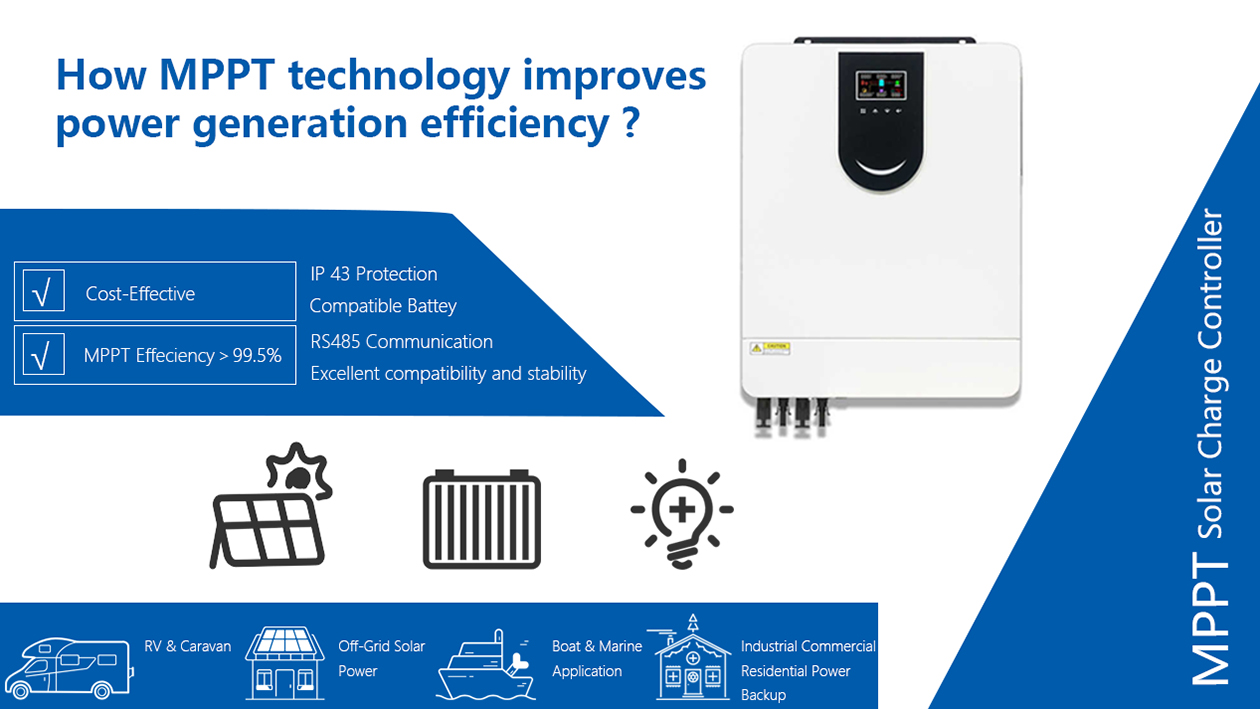
Driven by the "dual carbon" goal, the global photovoltaic industry is accelerating technological innovation. Among them, MPPT (maximum power point tracking) technology, as the core of photovoltaic power generation systems, has become a key engine for improving power generation efficiency by dynamically optimizing energy conversion efficiency. According to industry data, photovoltaic systems using advanced MPPT technology can increase power generation efficiency by 10%-30% compared with traditional solutions, providing important support for the efficient use of renewable energy.
MPPT technology principle: dynamic tracking of maximum power point
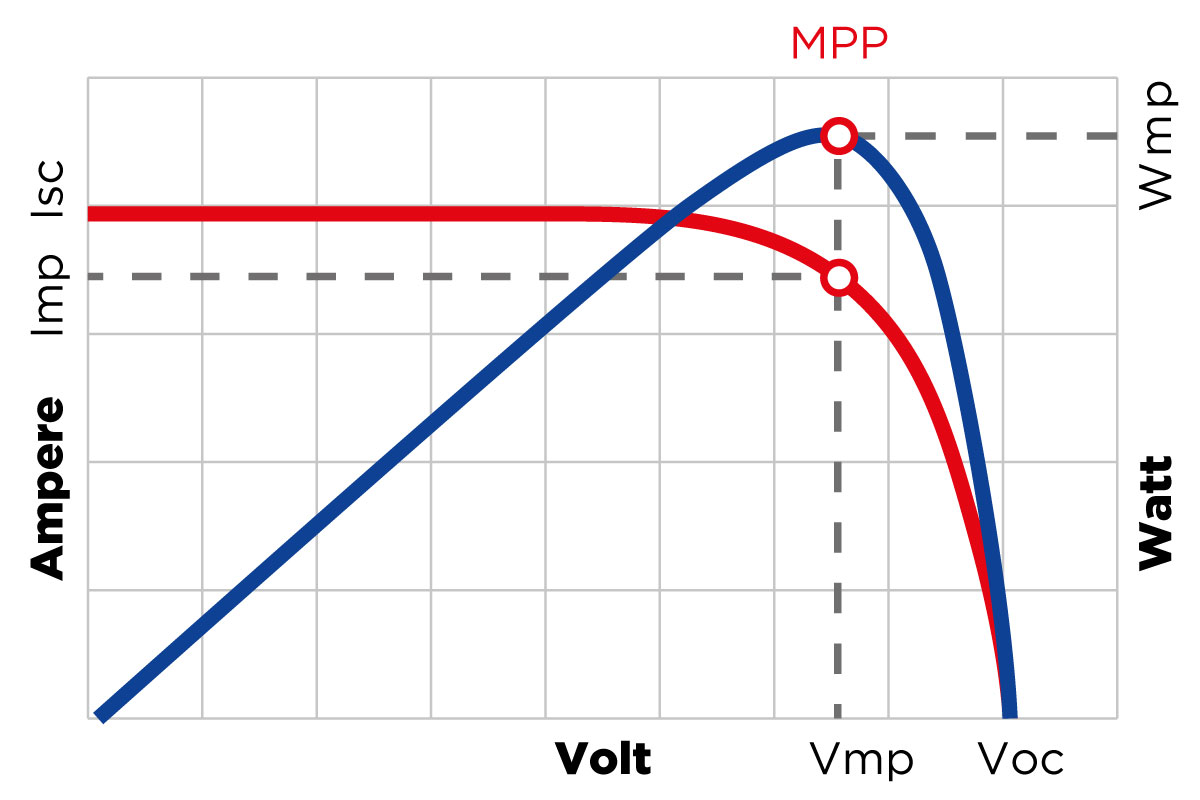
MPPT technology is based on the nonlinear output characteristics of photovoltaic cells. By real-time monitoring of voltage, current and power parameters, it dynamically adjusts the working point of photovoltaic modules so that they always operate at the maximum power point (MPP). For example, when the light intensity or temperature changes, the MPPT controller will adjust the equivalent impedance through the DC/DC conversion circuit to match the internal resistance of the photovoltaic array, thereby maximizing the output power.
The current mainstream MPPT algorithms include:
1. Perturbation and observation method (P&O): By periodically perturbing the voltage and observing the direction of power change, gradually approaching the maximum power point, it is suitable for scenes with stable light.
2. Incremental conductance method (IncCond): Combine the conductivity change rate to accurately determine the power point direction, reduce oscillation, and improve dynamic response speed.
3. Fuzzy control algorithm: Use intelligent algorithms to handle nonlinear problems, adapt to complex environmental changes, and have higher accuracy.
Three core advantages of efficiency improvement
1. Environmental adaptability
MPPT technology can adjust in real time according to light intensity, temperature and shading conditions. For example, in cold climates, the output voltage of photovoltaic modules increases, and the MPPT controller can accurately match the battery charging demand, and the efficiency is 30% higher than that of traditional PWM controllers. In high temperature or shadow shading scenarios, the multi-channel MPPT architecture (such as branch tracking of different strings) can reduce mismatch losses and increase power generation by 15%-20%.
2. Dynamic response and stability
Faced with rapidly changing atmospheric conditions (such as floating cloud shading), the MPPT controller completes adjustments within milliseconds through high-precision current sensors (such as closed-loop sensors) and fast sampling circuits (error ≤0.4%) to minimize power fluctuations.
3. System cost optimization
MPPT technology can significantly reduce the cost of the entire life cycle by reducing the number of photovoltaic modules, extending equipment life (such as avoiding battery overcharging) and reducing operation and maintenance costs. Studies have shown that its long-term economic benefits are 20%-40% higher than traditional solutions.
Practical Application and Industry Progress
MPPT technology has shown remarkable results in complex terrain and distributed scenarios.
Mountain power station: The use of multi-channel MPPT inverters (such as 2-4 strings per channel) can solve the problem of component orientation differences and local shadows, and improve power generation efficiency by 25%.
Household energy storage system: The intelligent controller with integrated MPPT can adapt to different battery types (such as lithium battery, lead acid), with a charging efficiency of more than 97%, and supports remote monitoring and fault warning.
Future Trends: Intelligence and Multi-Technology Integration
With the iteration of photovoltaic technology, MPPT is making breakthroughs in the following directions: AI-driven adaptive algorithm: Combined with machine learning to predict weather changes and optimize the working point in advance. Wide voltage range design: Supports 150V-850V input and is suitable for high-efficiency components (such as HJT, perovskite). Photovoltaic storage synergy: Linked with energy storage system to smooth power fluctuations and improve grid compatibility.
MPPT technology is not only the "guardian" of photovoltaic power generation efficiency, but also the core driving force for energy transformation. As the global photovoltaic installed capacity exceeds 10TW, its technological innovation will continue to release green potential and provide a solid technical foundation for building a zero-carbon future.