
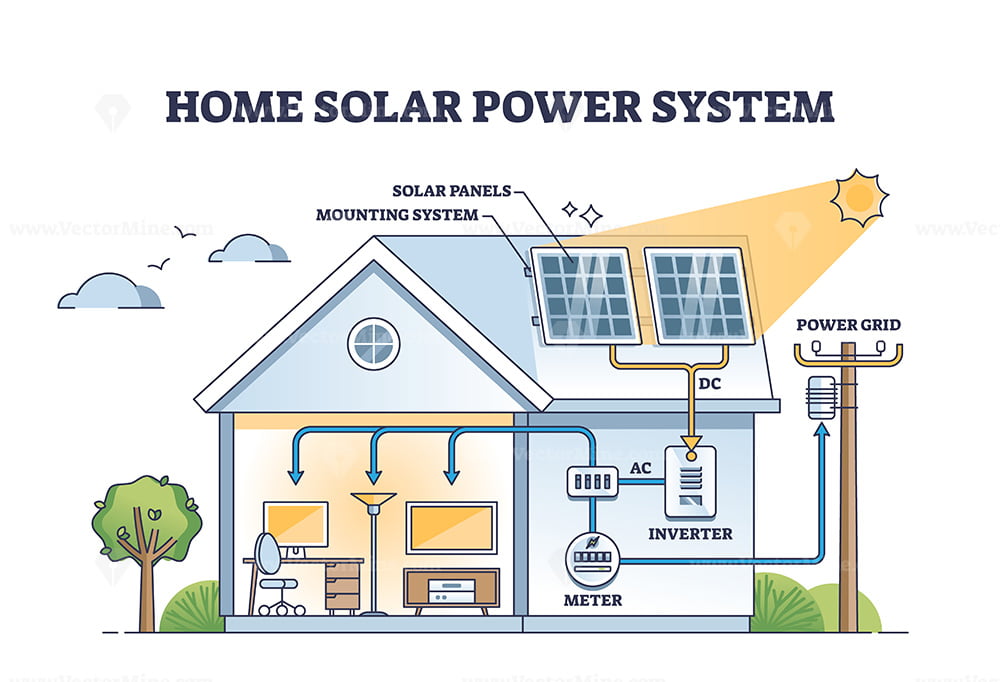
By installing a home photovoltaic system, you can save money on your household expenses by significantly reducing your electricity bill. Choosing the right PV modules and storage batteries is a key factor in ensuring that the entire system operates stably and generates electricity efficiently. The quality and performance of the PV modules directly affect the system's power generation efficiency, while the storage batteries are responsible for storing excess power and ensuring that the electricity can be utilized properly even when there is no sunlight.
Therefore, when shopping for these devices, it is important to carefully research and compare different brands and models to ensure that the product you choose meets your home's electricity needs and offers good value for money. Only then will you be able to take full advantage of your home PV system and realize the long-term economic and environmental benefits.
1. Understand Your Household Electricity Needs
Before choosing solar panels and storage batteries, evaluate your household’s electricity consumption. Reviewing your electricity bills over the past year to understand average daily and peak usage helps determine the system size and battery capacity needed.
2. Choose the Right Solar Panels
① Panel Types: Common options include monocrystalline, polycrystalline, and thin-film panels. Monocrystalline offers higher efficiency and suits homes with limited space; polycrystalline is more affordable for budget-conscious users.
② Power Rating: Typical residential panels range from 250W to 550W per unit; multiple panels combine to form the solar array.
③ Brand & Quality: Opt for reputable brands with certifications to ensure stability and durability.
3. Selecting Energy Storage Batteries
① Battery Types: Common residential options include lead-acid batteries (AGM, GEL) and lithium batteries (e.g., lithium iron phosphate). Lithium batteries last longer and offer higher efficiency but cost more; lead-acid batteries are budget-friendly.
② Capacity: Choose capacity based on nighttime and emergency power needs, usually measured in kilowatt-hours (kWh).
③ Charge/Discharge Performance: Select batteries with long cycle life and good deep discharge performance to extend system lifespan.
4. System Compatibility and Installation Services
Ensure compatibility among solar panels, storage batteries, and inverters, and select an experienced installation team to guarantee safe and efficient system operation.
5. Government Subsidies and Policies
Understand local renewable energy policies and subsidies to reduce installation costs and improve return on investment.
Summary
By properly assessing your electricity needs, choosing suitable solar panels and storage batteries, and leveraging professional installation and policy incentives, home users can enjoy a greener lifestyle while reducing electricity bills.