
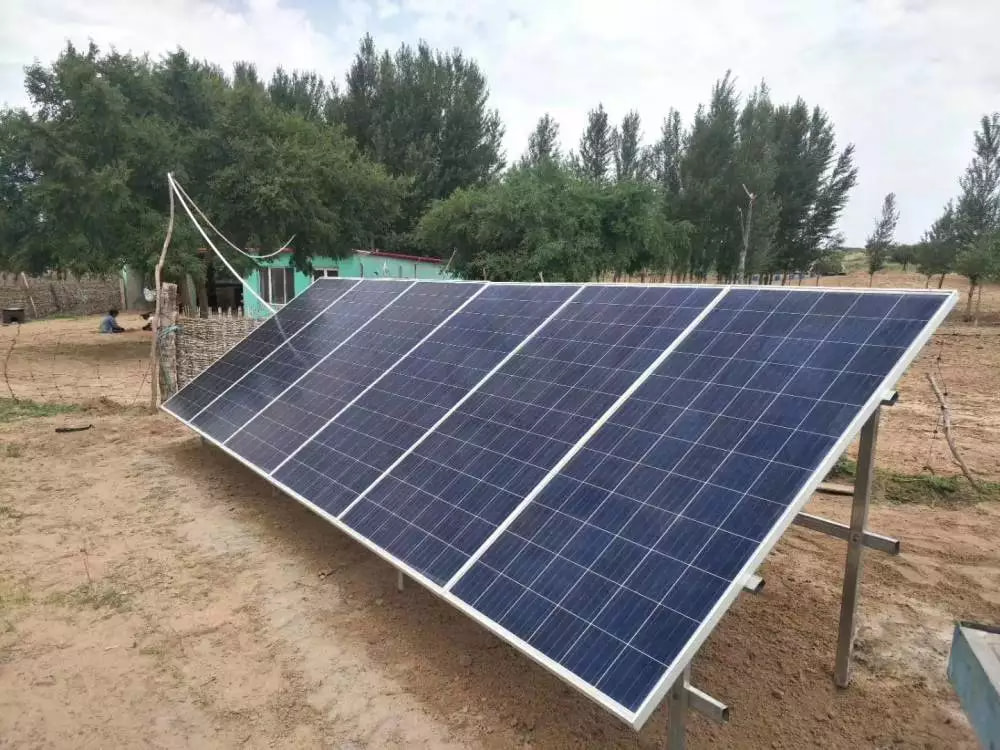
In Chipata Village, Luangwa Valley, Zambia, 90% of villagers have never been connected to the national grid. Households rely on kerosene lamps (mothly cost: $15, consuming 25% income). Lack of nighttime lighting leads to high dropout rates among childre (especially girls), medical clinics being unable to store medicines, and the village’s only small-scale mille operating at a loss due to the high cost of diesel power generation.
User Demand Prioritization
Household-level: Basic lighting (3×5W LED lamps), mobile phone charging (10W), radio (20W).
Community-level: Water pump (1.5kW for drinking water and irrigation), medical clinic refrigerator (800W), school computers (300W).
Production-level: Grain mill (3kW to support agricultural processing).
Technical Configuration
Photovoltaic Modules: Monocrystalline half-cut solar modules (2×330W per household), total installed capacity of 62kW.
Energy Storage System: 48V/100Ah LiFePO4 batteries per household (4.8kWh), centralized community storage system (50kWh).
Climate Resilience Design: Dust-proof junction boxes, galvanized mounting brackets (to withstand high humidity during rainy seasons).
Localized Operations: The company trains villagers to handle installation, fee collection, and maintenance.
Climate Resilience: Modules installed 2 meters above ground to protect against wildlife; battery boxes equipped with ventilation and cooling systems.
Economic: Household energy expenses reduced by 80%, saving $144 annually per family.
Education: Students gained 3 additional hours of evening study time, boosting secondary school graduation rates.
Environmental: Annual reduction of 12,000 liters of kerosene consumption and 31 tons of CO2 emissions.