
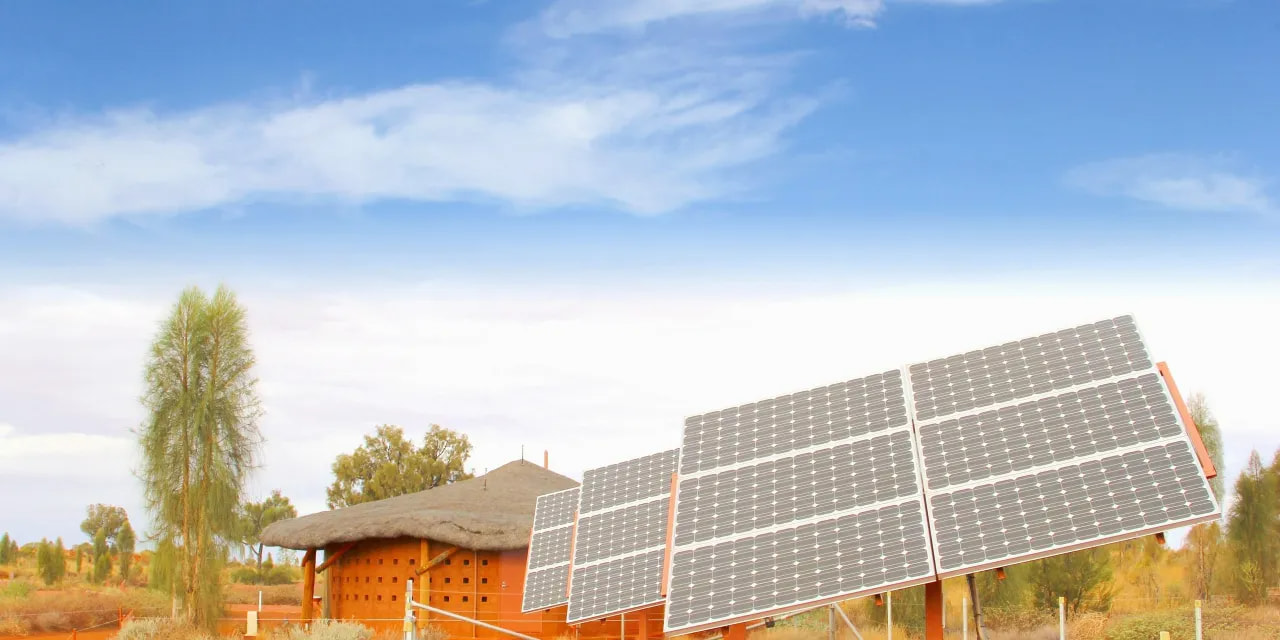
In sub-Saharan Africa, over 600 million residents still lack access to reliable electricity supply. Many remote villages are forced to rely on kerosene lamps and diesel generator, or endure complete darkness after sunset. Take Mwanga village in Tanzania as an example: located over 80 kilometers from the nearest urban grid connection, villagers face restricted nighttime activities, and students must complete their homework before dusk.
Project Objectives: Provide clean electricity for Mwanga village and affordable electricity to meet the basic needs of homes and schools.
System configuration:
Photovoltaic modules: 20kWh distributed photovoltaic array, using high-efficiency monocrystalline silicon modules, can adapt to high temperature and high humidity environment.
Energy storage system: the 48V / 400Ah lithium-ion battery at night and on cloudy days.
Intelligent control: Integrate inverters with the Energy Management System (EMS) to prioritize the distribution of power to critical facilities.
Flexible extension: the modular design allows the expansion according to the requirements, and home users can independently access to 1-5kW subsystems.
Community Engagement: local villagers are trained in the installation and maintenance, and are responsible for the daily operation and maintenance work.
| Metric | Pre-Implementation | Post-Implementation |
| Household electrification rate | 8% | 92% |
| Children’s nightly study time | <1 hour/day | 3 hours/day |
| Energy expenditure proportion | 25% of income | 8% of income |
Small off-grid solar systems are not only a technical solution, but also a key driver of sustainable development in rural Africa. Enpowered bu clean energy, the example of Mwanga Village shouws how light transcends the limits of the grid, opening up prospects for educattion, health and economic development.